Things they don't tell you when buying a geared MTB
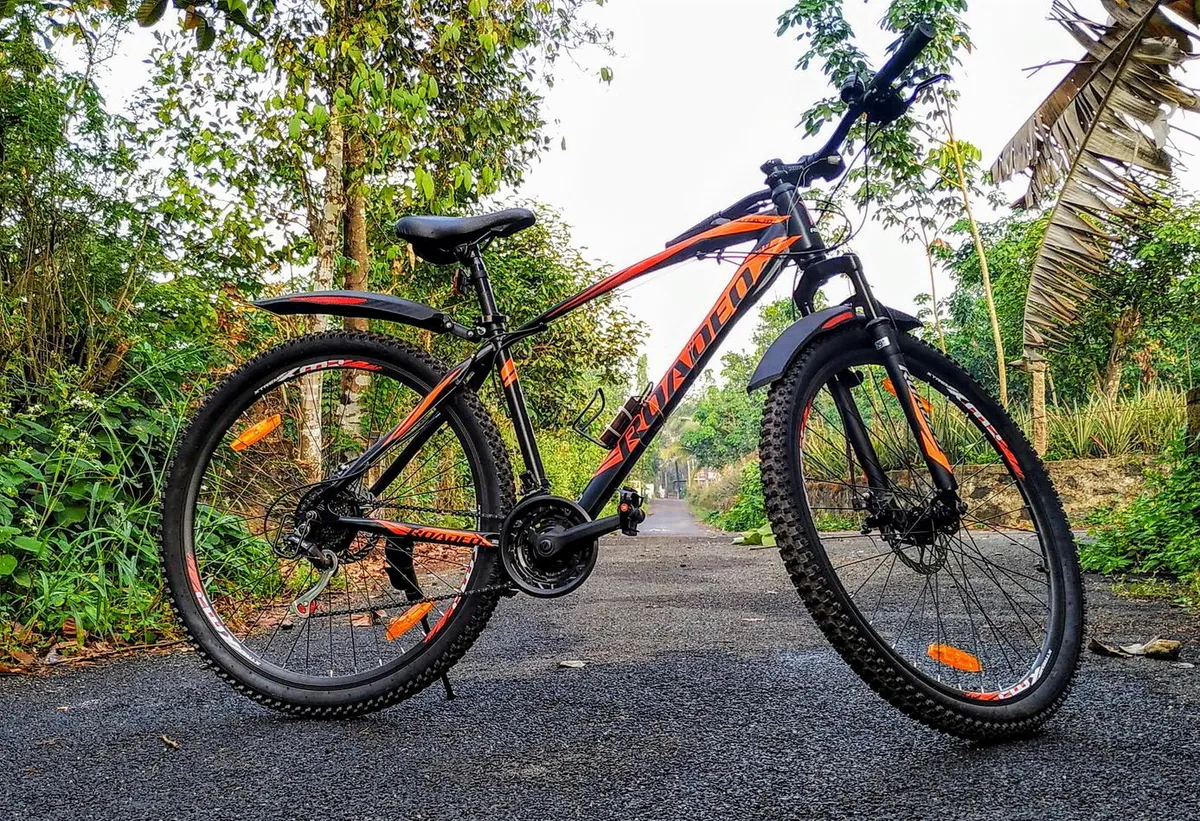
I bought a bike recently, nothing fancy just an entry level one with gears. My old bike was 26” and without gears (plus a bulky frame and chromium parts that weighed it down), that was five years ago.
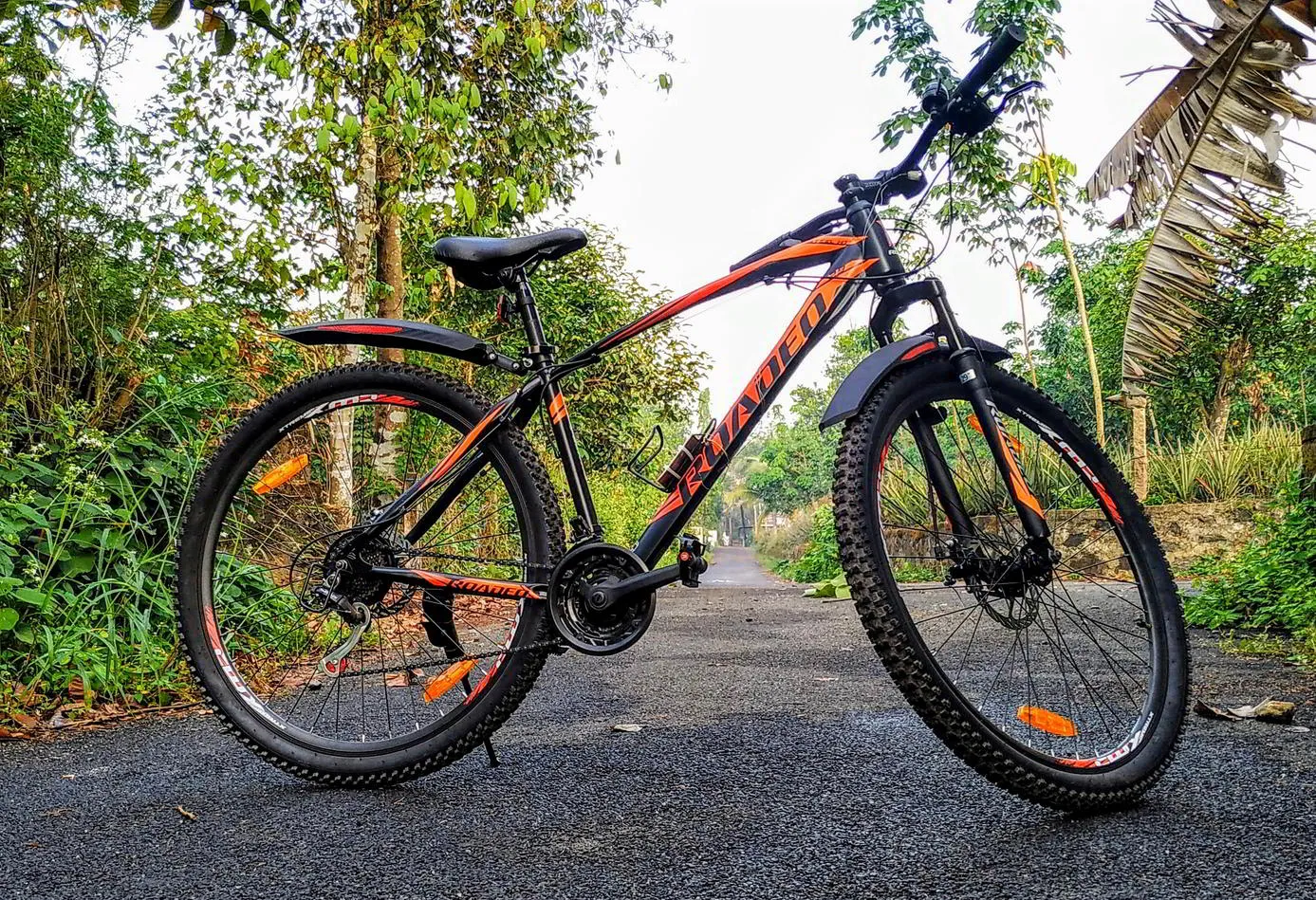
Now, this one is 29” and has gears - Shimano Tourney TZ and a 21 speed system. Naturally, I went for a mountain bike (MTB) again as I live in a hilly terrain with a strange mix of canals, low lying paddy fields and hills in between. Thankfully, all of the roads are tarred and it’s not very hard to navigate. My rides are mostly early in the morning. I cover around 8.5km everyday (and about 14 km on Saturdays) starting at 05:30 AM when it is still starry and beautiful. Going downhill at full speed on a chilly night is awesome! And on some days, there’s a section of the circuit where there is a paddy field that gets very foggy and when I go along that route, I can feel the cold air brushing past my feet while there’s the warm tinge of exhaustion spreading from my thighs. It’s a weird feeling. 😂
Things to consider when buying a bike:
- Type - Road / Hybrid / MTB - Depends on your riding environment
- Drive - Geared / Gear-less - Depends on a lot of factors which I will cover shortly
- Size - Depends on your height ofc
- Cost
Type
- Road bikes have the thinnest tires so they have less contact with the road ⇒ less friction ⇒ easier to ride ⇒ goes faster
- Thinner tires also ⇒ less likely to get punctured and lower grip on non-tarmac surfaces
- Road bikes have lighter frames and are more optimized for speed.
- MTBs have thicker tires so they have more contact with the road ⇒ more friction ⇒ more grip ⇒ harder to ride on roads ⇒ not as fast as hybrids or road bikes
- Thicker tires also ⇒ more likely to get punctured, but it shines in off-road conditions and wet weather.🌧 (it’s in the name after all - “Mountain Terrain” Bike)
- MTBs also have strong and heavier frames that can take all the stress associated with the rough terrains.
- Road bikes are everything that come in between and hence is probably the most popular choice.
Drive
- Get a gear-less bike if you:
- just-want-a-simple-bike
- live-in-a-relatively-flat-place-(without-much-elevation)
- “don’t-want-to-think-about-maintenance-often”
- “don’t-want-to-understand-all-those-complicated-gear-systems”
- are-on-a-budget
- Get a geared bike if you:
- live-in-an-uneven-terrain
- “are-willing-to-understand-how-the-gear-system-works-(-mind-you,-it’s-not-as-easy-as-the-gearbox-you-have-in-cars-)“
Things I got to know after getting an MTB:
- In a 21 speed bike, I cannot use all the 21 gear ratios. There are 7 gears on the rear derailleur and 3 gears on the front derailleur. This makes it 7 * 3 = 21 possible combinations of gear ratios. However, extreme and opposite gear ratios in the front and back leave your chain at an angle and it drastically reduces chain life. So the only recommended gear ratios are as follows:
Front DerailleurRear Derailleur1
( smallest chain ring )1,2,3
( largest sprockets )23,4,53
( largest chain ring )5,6,7
( smallest sprockets )
-
There’s a recommended shifting pattern too :
Assume you are starting from the first gear on both derailleurs. (Front = 1 and Rear = 1).
The first three shifts are of the rear derailleur. Now (Front = 1 and Rear = 3). Then shift the front derailleur to the second gear (Front = 2 and Rear = 3). This is followed by three shifts of the rear derailleur (Front = 2 and Rear = 5).
Next put the front derailleur to the highest gear. (Front = 3 and Rear = 5).
This is followed by three shifts of the rear derailleur. (Front = 3 and Rear = 7)The exact reverse should be used for downshifting. Now, I believe its obvious why I have gears overlapping. i.e my third gear of the rear derailleur can be used with both in Front derailleur gear 1 and 2. So this gives us a set of 9 usable gears only. Do note that this is my conservative gear shift patterns. You’ll find online guides that allow much more liberal use of the gears. The only thing to avoid is extreme opposite gear ratios in the front and rear eg: Front derailleur in Gear 1 and Rear Derailleur in gear 6 or vice versa.
-
You can start and stop at any gear (unlike cars with a manual gearbox that will only start running at the lowest gear). The only thing that varies is the amount of effort that you need to get it to start moving.
-
You cannot shift gears whenever you like, you have to anticipate hills and shift to a lower gear in advance. Shifting gears when you’re putting in a lot of effort while pedaling will wear out the gears and the chain.
-
When shifting from a smaller sprocket (or chain ring) to a larger sprocket (or chain ring) you should engage the gear shift lever until you hear the gears shift or you can feel enough tension in the chain. While when shifting from a larger sprocket (or chain ring) to a smaller sprocket (or chain ring) you can simply engage the gear momentarily and the spring mechanism shifts gears as effortlessly as flicking a switch.
-
If you drop your chain, on a geared bike it is actually easier to put it back on than in a gear-less bike, as you can simply apply a bit of pressure on the front derailleur to align the chain and pedal once to let the chain fall in place. This is true if the chain falls to the inner side of the innermost chain ring. If however it falls beyond the outermost chain ring, the first thing to do is to put it on the inner side. Once done, ensure that the gears indicated on the shifters are the ones on which the chain is.
-
Front derailleurs are used for making large changes in effort (or RPM) and rear derailleurs are used to make incremental changes. I guess this is why troubles start first with the front derailleur. I had to learn to tune my front derailleur. I’d recommend videos are Park Tool for most tuning and repairs.
- Here’s one for rear derailleurs too
- If you can hear the noise of the chain rubbing against the chain cage in any gear, try adjusting the barrel shifters first. If that doesn’t work you have to properly adjust your H and L limit screws.
There’s a lot more coming soon! 😂
Comments